
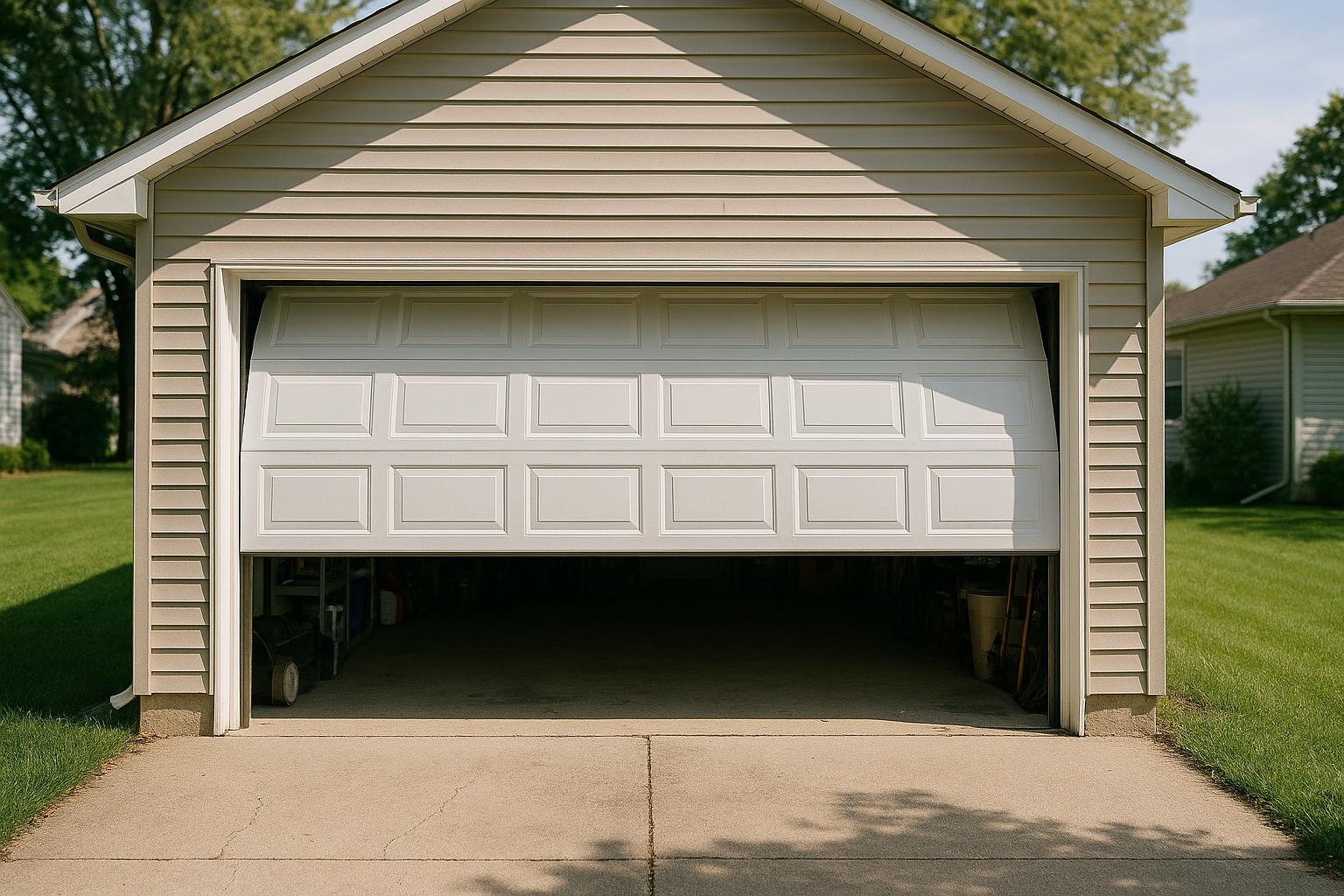
When Your Garage Door Refuses to Close
You press the button on your garage door opener, the motor hums, and then nothing happens — or the door starts to move and immediately reverses. Few household problems are as annoying as a garage door that won't close, especially when you're trying to leave for work on a cold St Joseph morning or lock up for the night.
The good news is that most causes of a garage door that won't close are identifiable and fixable. Some you can handle yourself in a few minutes, while others call for a professional. Let's walk through the most common culprits so you can get your door working again as quickly as possible.
1. Something Is Blocking the Safety Sensors
Every garage door opener manufactured after 1993 is required to have photoelectric safety sensors mounted near the bottom of the door tracks on each side. These sensors shoot an invisible beam across the opening. If anything breaks that beam — a trash can, a bicycle, a garden hose, even a cobweb — the door will refuse to close or will reverse immediately after starting to move.
What to Check
- Look at both sensors. Most have a small LED light. If one light is off or blinking, the beam is being interrupted.
- Remove any objects near the bottom of the doorway.
- Wipe the sensor lenses with a clean cloth. Dust, dirt, and spider webs are surprisingly common causes in garages around St Joseph, especially during spring and fall.
- Make sure neither sensor has been bumped or knocked out of alignment. They need to point directly at each other.
If the lights are steady on both sensors and the path is clear, the problem likely lies elsewhere.
2. The Safety Sensors Are Misaligned
Even a small bump from a lawnmower handle or a kid's bike can knock a safety sensor out of position. When the sensors can't see each other, your opener interprets this as an obstruction and prevents the door from closing.
How to Realign Them
Loosen the wing nut or bracket screw on the sensor that appears to be off. Gently adjust the sensor until the indicator light turns solid. Tighten the bracket back in place. Test the door. If you're having trouble getting both sensors to line up, it may be that the bracket is bent or the wiring has come loose — both situations where calling a technician saves time and frustration.
3. The Close-Limit Switch Needs Adjusting
Your garage door opener has limit switches that tell it how far the door should travel when opening and closing. If the close-limit switch is set incorrectly, the opener may think the door has hit the floor before it actually has, or it may think the door is hitting an obstruction and reverse.
Limit switch adjustment varies by opener brand and model. On many units, there are small adjustment screws on the back or side of the motor housing. Turning the down-limit screw in small increments can often solve the problem. Check your owner's manual for specific instructions. If you're not comfortable making this adjustment, a garage door technician can dial it in quickly.
4. The Remote or Wall Button Is Malfunctioning
Sometimes the issue isn't the door at all — it's the device you're using to control it. Try these steps:
- Replace the battery in your remote control. Weak batteries can send incomplete signals.
- Try using the wall-mounted button inside the garage. If the wall button works but the remote doesn't, the remote may need to be reprogrammed or replaced.
- If neither the remote nor the wall button works, check that the opener is plugged in and that the outlet has power. It sounds obvious, but power outages and tripped breakers happen more often than you'd think.
5. Broken or Damaged Tracks
The metal tracks that guide your garage door up and down need to be straight, clean, and properly aligned. Over time, tracks can develop bends, accumulate debris, or shift out of position. When this happens, the door may bind or stop partway through its travel, triggering the opener's safety reverse.
Inspect the tracks on both sides of the door. Look for visible dents, gaps between the track and the wall-mounted brackets, or buildup of grime and grease. Minor debris can be cleaned out, but bent or misaligned tracks usually require professional repair. Forcing a door along damaged tracks can cause much bigger — and more expensive — problems down the road.
6. Worn or Broken Cables
Garage door cables work together with the springs to control the door's movement. If a cable has frayed, snapped, or come off the drum, the door may close unevenly, get stuck, or refuse to move at all. You might also notice the door hanging at an angle.
Important: Garage door cables are under significant tension. Do not attempt to repair or replace cables yourself. This is a job for a trained professional with the right tools and experience. Attempting a DIY cable repair is one of the most dangerous things a homeowner can do.
7. The Disconnect Switch Is Engaged
Most garage door openers have a disconnect feature — usually a cord or lever that allows you to operate the door manually during a power outage. If this has been accidentally engaged, the opener motor will run but the door won't move because the trolley is disconnected from the drive mechanism.
Look for a hanging cord or handle near the opener rail. If it's been pulled, simply reattach the trolley according to your opener's instructions. Usually this involves pulling the cord toward the opener and then activating the opener to re-engage the connection.
8. The Opener Logic Board Has Failed
If you've checked everything above and the door still won't close, the problem may be the logic board inside the opener unit. The logic board is essentially the brain of the system, and like any electronic component, it can fail over time. Power surges — not uncommon during St Joseph's summer storms — are a frequent cause of logic board failure.
Replacing a logic board is a job for a professional. In some cases, especially with older openers, it makes more sense to replace the entire unit rather than repair it. A garage door technician can help you weigh the cost of repair versus replacement.
When to Call a Professional
Some of the fixes above are simple enough for any homeowner — clearing obstructions, replacing remote batteries, wiping sensor lenses. But when the problem involves springs, cables, tracks, or electrical components, it's worth calling in someone who does this work every day.
At St Joseph Garage Door Service, we handle these calls regularly for homeowners and businesses across St Joseph, Savannah, Country Club, and the surrounding areas. We'll diagnose the issue, explain your options in plain language, and get your door working properly — usually in a single visit.
Don't Ignore a Door That Won't Close
A garage door stuck in the open position is more than an inconvenience. It's a security vulnerability for your home and everything inside your garage. It also exposes your garage to weather, pests, and temperature extremes that can affect anything stored inside — not to mention your energy bills if your garage is attached to your home.
If your garage door won't close and the simple fixes haven't solved the problem, don't wait for it to get worse. Give us a call and we'll take care of it so you can get back to your routine with one less thing to worry about.