
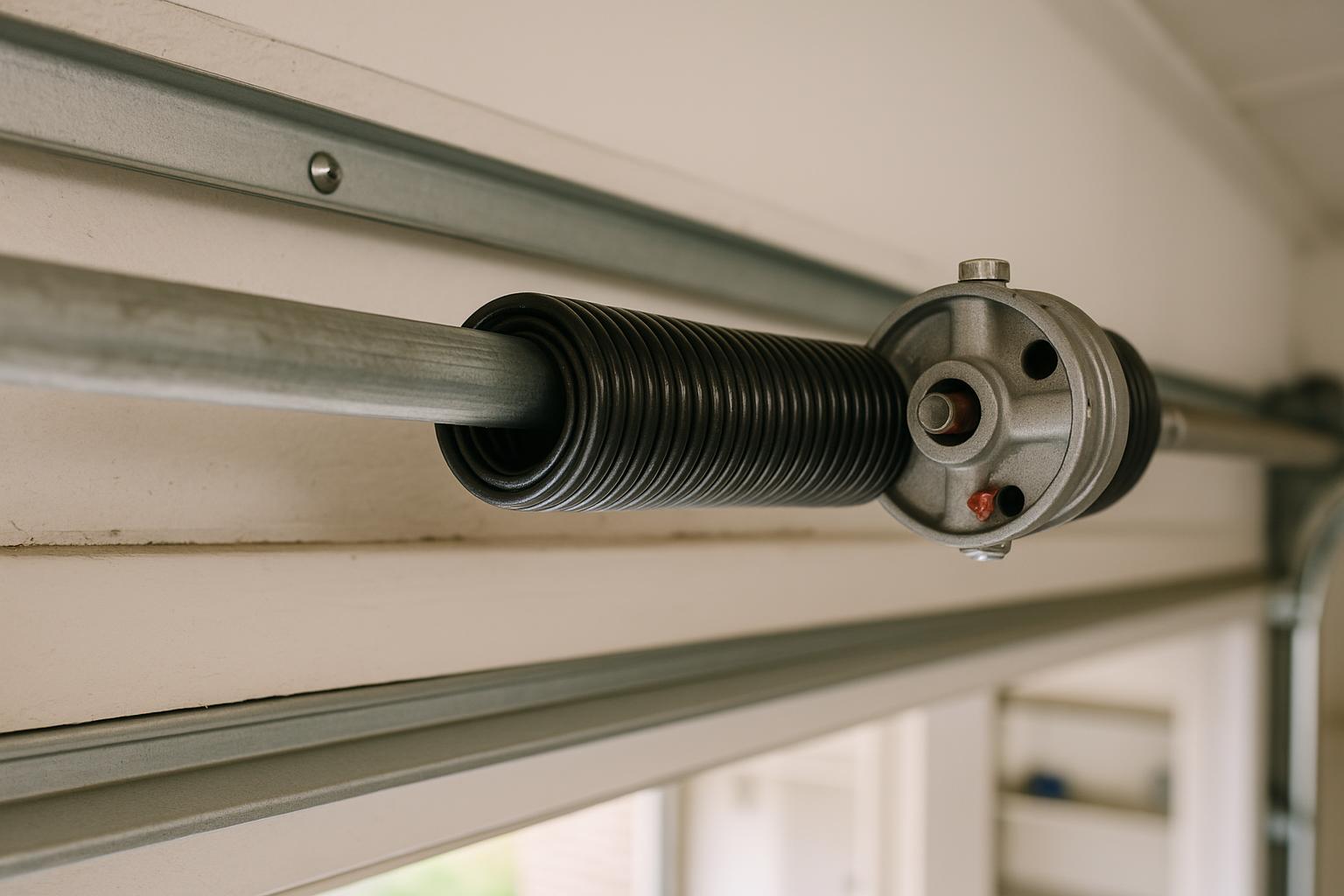
Your Garage Door Springs Are Working Harder Than You Think
Every time you open and close your garage door, the springs do the heavy lifting — literally. A standard torsion spring is rated for about 10,000 cycles, which means if you use your garage door four times a day, those springs could wear out in roughly seven years. For families in St Joseph who rely on their garage every single day, that timeline can sneak up fast.
The good news is that garage door springs rarely fail without warning. There are almost always signs that something is wearing down. Knowing what to look for can save you from getting stuck with a door that won't open on a freezing Missouri morning — or worse, a spring that snaps while someone is standing nearby.
What Do Garage Door Springs Actually Do?
Your garage door is one of the heaviest moving objects in your home, often weighing between 150 and 300 pounds. The springs counterbalance that weight so the opener doesn't have to do all the work. Without functioning springs, most openers can't lift the door at all.
There are two main types of springs used in residential garage doors:
- Torsion springs — mounted on a metal shaft above the door opening. These twist to store energy and are the most common type in modern installations.
- Extension springs — mounted along the horizontal tracks on either side of the door. These stretch and contract to assist with lifting.
Both types are under extreme tension, which is why spring repair and replacement should always be handled by a trained professional. A spring under tension can cause serious injury if it's not handled correctly.
7 Warning Signs Your Garage Door Springs Are Failing
1. The Door Feels Heavier Than Usual
Try disconnecting your opener and lifting the door manually. A properly balanced door should lift smoothly and stay open about three or four feet off the ground. If it feels extremely heavy or slams back down, your springs are losing tension and can't support the door's weight anymore.
2. The Door Opens Unevenly or Crooked
If one side of the door rises faster than the other, it often means one spring is weaker than its counterpart. This is especially common with extension spring systems where each side operates somewhat independently. An uneven door puts extra stress on the tracks, rollers, and opener, leading to more problems down the road.
3. You Hear Loud Squeaking or Grinding
Some noise is normal, but a sudden increase in squeaking, popping, or grinding sounds when the door moves is a red flag. Worn springs can produce a strained metallic sound that's noticeably different from typical operation. If your garage door has gotten louder recently, it's worth having someone take a look.
4. There's a Visible Gap in the Spring
This one is straightforward. If you look at the torsion spring above your door and see a visible gap or separation in the coils, the spring has already broken. A broken torsion spring will have a clear gap of an inch or two where the coils have separated. If you spot this, do not try to operate the door — call a professional right away.
5. The Opener Struggles or Stops Mid-Cycle
When springs lose their ability to counterbalance the door, your opener has to work much harder. You might notice the motor straining, the door reversing partway up, or the opener shutting off before the door fully opens. Many homeowners in St Joseph assume the opener is the problem, but worn springs are often the real culprit.
6. The Door Closes Too Fast
A garage door should close in a controlled, steady motion. If it drops quickly or slams shut, the springs aren't providing enough resistance to slow the descent. This is a safety hazard, especially for households with children or pets who might be near the door.
7. You Can See Rust or Corrosion on the Springs
Rust weakens the metal and shortens the lifespan of your springs significantly. Humidity and temperature swings — something we get plenty of here in the St Joseph area — accelerate corrosion. If your springs look rusty or pitted, they're more likely to fail sooner than expected.
Can You Replace Garage Door Springs Yourself?
We understand the DIY spirit, and there are plenty of garage door maintenance tasks that homeowners can safely handle on their own — lubricating moving parts, tightening hardware, or testing the auto-reverse safety feature. Spring replacement is not one of them.
Garage door springs are under an enormous amount of tension. Torsion springs in particular require specialized tools and training to remove and install safely. Every year, emergency rooms across the country treat injuries from homeowners who attempted spring repairs without the proper equipment or experience.
The risk simply isn't worth the savings. A professional spring replacement is one of the more affordable garage door repairs, and it typically takes less than an hour to complete.
How Long Do Replacement Springs Last?
Standard torsion springs are rated for approximately 10,000 cycles. If you want longer-lasting performance, high-cycle springs rated for 25,000 or even 50,000 cycles are available. They cost a bit more upfront but can save you money over the life of your garage door by reducing the frequency of replacements.
When we replace springs for homeowners in St Joseph, Savannah, and the surrounding communities, we always discuss the options so you can make the choice that fits your budget and how often you use your garage door.
What to Do When a Spring Breaks
If a spring breaks while the door is closed, leave it closed. Do not try to open it manually or with the opener. If it breaks while the door is open, do not try to close it — the door could come crashing down. In either case, the safest move is to call a garage door professional to assess the situation and replace the spring.
Here's a quick checklist if you suspect a spring failure:
- Stop using the garage door immediately.
- Disconnect the automatic opener to prevent accidental activation.
- Keep children and pets away from the door.
- Call a qualified garage door technician for repair.
Stay Ahead of the Problem
The best way to avoid a sudden spring failure is regular maintenance. An annual inspection can catch early signs of wear, rust, or imbalance before they turn into a breakdown. During a maintenance visit, a technician can also lubricate the springs, check the balance of the door, and inspect other components that affect spring life.
At St Joseph Garage Door Service, we help homeowners and businesses across St Joseph and nearby communities like Country Club, Elwood, and Wathena keep their garage doors operating safely and reliably. If your door is showing any of the warning signs we've covered, don't wait for a complete failure. Give us a call, and we'll get it taken care of — honestly, affordably, and on your schedule.