
Your Garage Door Works Hard — It Deserves a Little Attention
Think about how many times you open and close your garage door in a single day. If you're like most families in St Joseph, it's probably at least four times — maybe more. That adds up to well over a thousand cycles every year, and every one of them puts stress on springs, cables, rollers, hinges, and the opener itself.
Despite all that use, garage door maintenance is one of the most overlooked home tasks. Most people don't think about their garage door until it starts making strange noises, moves unevenly, or stops working altogether. By that point, a minor issue has usually turned into a more expensive repair.
The good news? A little preventive maintenance goes a long way. Let's break down how often you should service your garage door, what's involved, and why it matters for your safety and your wallet.
The Short Answer: At Least Once a Year
At a minimum, your garage door should get a professional inspection and tune-up once a year. Think of it like an oil change for your car — it's routine, it's affordable, and it prevents much bigger problems down the road.
If your garage door gets heavier-than-average use — maybe you have multiple drivers in the household, you use the garage as your main entrance, or you run a business that relies on a commercial door — twice a year is a better target.
What Does a Garage Door Tune-Up Include?
A proper maintenance visit isn't just a quick glance at the door. Here's what a thorough service appointment should cover:
Visual Inspection
A technician will examine every component of the system — the door panels, tracks, springs, cables, rollers, hinges, weatherstripping, and opener. They're looking for signs of wear, rust, fraying, misalignment, or damage that could lead to failure.
Lubrication
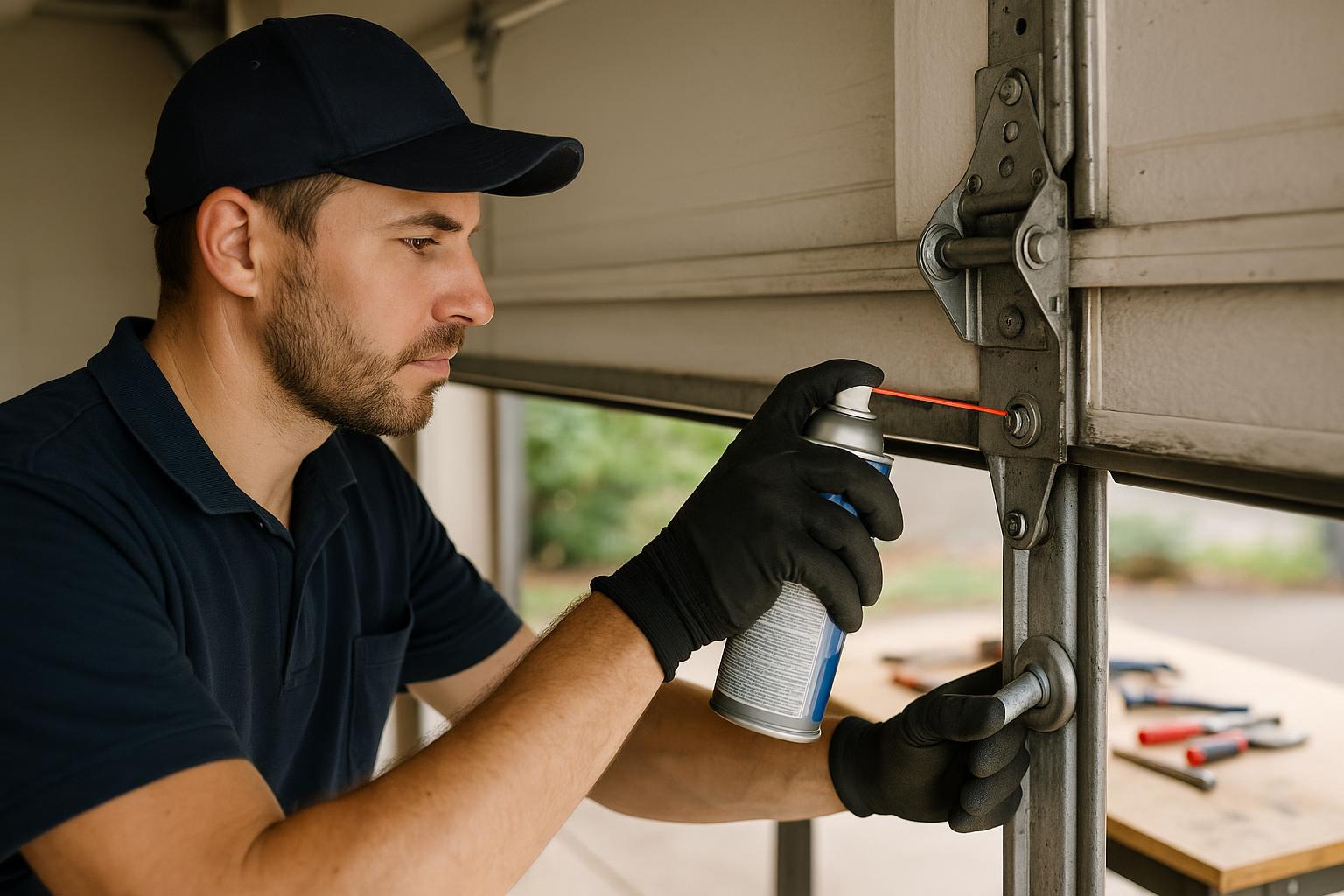
Moving parts need lubrication to operate smoothly and quietly. This includes the springs, rollers, hinges, and the opener's chain or screw drive. Using the right type of lubricant matters — standard WD-40 isn't ideal for most garage door components. A silicone-based or lithium grease lubricant is what professionals typically use.
Balance Test
A balanced garage door is essential for safe operation and for protecting your opener from unnecessary strain. During a balance test, the technician disconnects the opener and manually lifts the door to the halfway point. If it stays in place, the balance is good. If it slides up or drops down, the springs need adjustment.
Safety Reversal Test
Federal law requires garage doors manufactured after 1993 to have an auto-reverse feature. Your technician will test both the mechanical reversal (placing an object under the door) and the photo-eye sensors to make sure they're functioning correctly. This is especially important if you have children or pets.
Hardware Tightening
Vibration from daily operation gradually loosens bolts, brackets, and fasteners. A tune-up includes tightening all the hardware so everything stays secure and aligned.
Track Alignment Check
Even slightly misaligned tracks can cause the door to bind, move unevenly, or put extra stress on the opener. The technician will check that the tracks are properly aligned and clear of debris.
Weatherstripping Inspection
Here in St Joseph, we get everything from humid summers to freezing winters. Worn or cracked weatherstripping lets in drafts, moisture, pests, and dust. Replacing it is inexpensive and makes a real difference in your garage's comfort and energy efficiency.
What You Can Do Between Professional Visits
You don't need to be a technician to keep an eye on your garage door between annual service appointments. Here are a few simple things any homeowner can do:
- Listen for unusual noises. Grinding, squealing, popping, or scraping sounds are signs that something needs attention.
- Watch the door move. It should travel smoothly and evenly. Jerky movement, hesitation, or one side moving faster than the other are red flags.
- Keep the tracks clean. Wipe down the inside of the tracks with a damp cloth a few times a year to remove dirt and buildup.
- Test the auto-reverse. Place a roll of paper towels under the door and close it. The door should reverse immediately upon contact. If it doesn't, stop using the door and call a professional.
- Look at the cables. You should never touch or adjust garage door cables yourself — they're under extreme tension — but you can visually inspect them for fraying or wear.
Why Skipping Maintenance Costs More in the Long Run
We understand the temptation to skip maintenance when everything seems to be working fine. But garage door problems tend to snowball. A worn roller puts extra strain on the opener. A slightly unbalanced door accelerates spring fatigue. A loose bracket causes track misalignment.
What could have been a $100 maintenance visit turns into a $400 repair — or worse, an emergency call when the door fails at the most inconvenient time. We've seen it happen more times than we can count with homeowners across St Joseph and the surrounding communities like Savannah and Country Club.
There's also the safety factor. A garage door is the heaviest moving object in most homes, often weighing between 150 and 400 pounds. A malfunctioning door, broken spring, or failed safety sensor isn't just an inconvenience — it's a genuine hazard.
Commercial Doors Need Even More Attention
If you own a business in the St Joseph area that relies on overhead doors — a warehouse, auto shop, loading dock, or storage facility — your doors are working harder than any residential door. Commercial garage doors often cycle dozens of times per day, and a breakdown can halt your operations.
For commercial doors, we recommend quarterly inspections at a minimum. The cost of preventive maintenance is a fraction of the cost of downtime, emergency repairs, or liability issues from a malfunctioning door.
When to Call a Professional Between Scheduled Visits
Even with regular maintenance, issues can pop up. Don't wait for your next scheduled appointment if you notice any of the following:
- The door reverses direction for no apparent reason
- The door is visibly sagging or uneven
- You hear a loud bang from the garage (this often indicates a broken spring)
- The opener runs but the door doesn't move
- The door is slow to respond or moves sluggishly
- You see gaps between the door and the frame
Addressing these issues promptly can prevent further damage and keep your home or business secure.
Invest a Little Now, Save a Lot Later
Garage door maintenance isn't glamorous, and it's easy to put off. But an annual tune-up is one of the simplest and most cost-effective ways to protect your home, your family, and your investment. A well-maintained garage door operates more quietly, lasts years longer, and keeps your home secure through every season St Joseph throws at us.
At St Joseph Garage Door Service, we make maintenance easy. We show up on time, walk you through everything we find, and never push services you don't need. Whether you're in Elwood, Wathena, Agency, or right here in town, we're happy to help you keep your garage door in top shape — before a small issue becomes a big headache.